
How CRM for Real Estate Agents Helps Organize Leads and Contacts
By Admin
15-Sep-2026
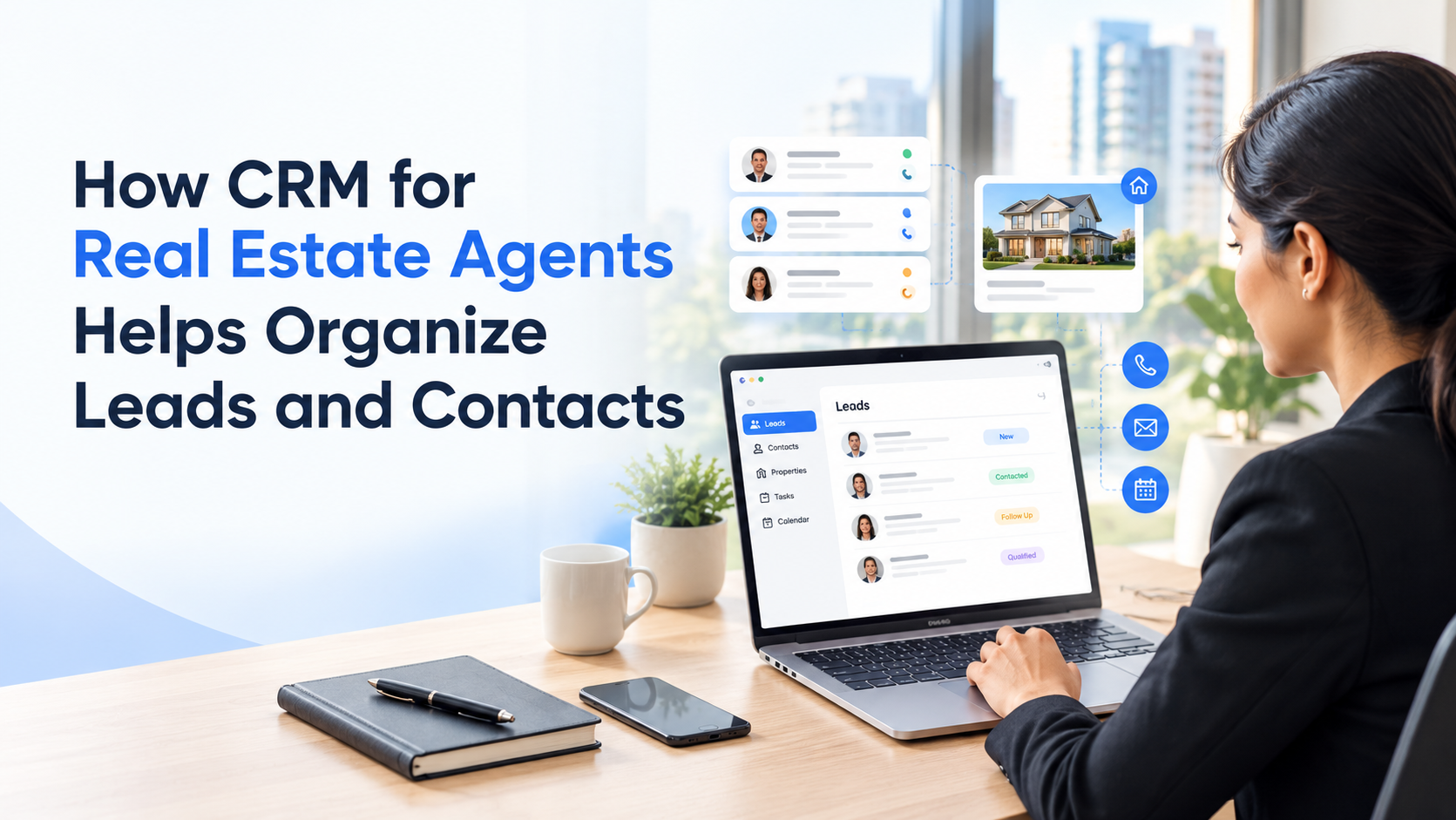
Real estate professionals handle a large amount of information every day, from buyer inquiries and property preferences to follow-up schedules and contact details. When this information is stored across spreadsheets, notebooks, emails, and messaging apps, it can become difficult to keep track of every opportunity.
A well-structured CRM helps agents spend less time searching for information and more time communicating with potential buyers and sellers. Instead of maintaining separate records for every inquiry, agents can use a centralized platform to manage leads, update their status, record interactions, and schedule follow-ups.
What Is a CRM for Real Estate Agents?
A CRM for real estate agents is a software solution designed to help property professionals manage relationships with leads, prospects, clients, and business contacts. It provides a centralized location where agents can store contact information, track conversations, manage follow-ups, and monitor the progress of potential deals.
Unlike a basic contact list, a real estate CRM can connect contact information with activities and sales opportunities. For example, an agent can identify which property a prospect is interested in, when the last conversation took place, what follow-up is due next, and where that prospect currently stands in the sales process.
This makes it particularly useful for professionals who manage multiple inquiries at the same time.
A real estate CRM can store information such as:
- Contact details
- Property preferences
- Budget requirements
- Preferred locations
- Lead source
- Communication history
- Follow-up activities
Why Organizing Leads and Contacts Matters
Real estate sales often depend on timely communication. A buyer who makes an inquiry today may be ready for a site visit next week, while another prospect may require several months of follow-up before making a decision.
Without proper organization, important details can easily be forgotten. Leads may receive delayed responses, follow-ups may be missed, or duplicate records may be created.
Effective Real Estate Lead Management helps solve these problems by giving agents a structured way to capture, categorize, prioritize, and follow up with prospects. Instead of treating every contact as a simple name and phone number, agents can maintain a complete history of their interactions.
How CRM Helps Organize Real Estate Leads
1. Centralizes Lead Information
One of the biggest advantages of CRM for real estate agents is centralized information. Leads from websites, property portals, social media, referrals, phone calls, and other sources can be recorded within one system.
This eliminates the need to search through multiple spreadsheets or applications whenever an agent needs information about a prospect.
A centralized database can include details such as:
- Name and contact information
- Property preferences
- Budget range
- Preferred location
- Lead source
- Communication history
- Follow-up dates
- Site visit information
- Current lead status
Having these details together gives agents a clearer understanding of every prospect.
2. Tracks Lead Status
Not every lead is at the same stage of the buying journey. Some may have just submitted an inquiry, while others may already have visited a property or entered negotiations.
Real Estate Lead Management allows agents to organize prospects according to their current stage. A typical sales pipeline may include:
New Inquiry → Contacted → Qualified → Site Visit → Negotiation → Closed
This makes it easier for agents to understand which leads need immediate attention and which ones require continued nurturing.
3. Makes Follow-Ups Easier
Follow-up is one of the most important parts of real estate sales. However, remembering every call, message, appointment, and reminder can become challenging when an agent manages a large number of prospects.
A CRM for real estate agents can help organize follow-up activities by recording previous interactions and highlighting upcoming tasks. Agents can create reminders, update lead statuses, and maintain notes about conversations.
This creates a more consistent follow-up process and reduces the chances of opportunities being overlooked.
4. Separates Leads Based on Their Requirements
Every real estate prospect has different requirements. One buyer may be looking for a two-bedroom apartment, while another may be interested in commercial property or a larger residential project.
CRM systems allow agents to categorize contacts based on factors such as property type, location, budget, buying timeline, and preferences.
With better segmentation, agents can focus their communication on relevant properties instead of sending the same information to every contact.
5. Maintains Complete Contact History
A prospect may speak with an agent several times before making a decision. During these conversations, they may discuss their budget, preferred location, property requirements, financing concerns, or questions about a particular project.
Keeping this information within a centralized contact record helps agents understand the context of future conversations.
6. Improves Team Collaboration
Contact organization becomes even more important when multiple agents work together. Without a shared system, different team members may contact the same prospect, miss important updates, or remain unaware of previous conversations.
A CRM for real estate agents can help teams assign leads, share notes, track activities, and monitor progress. Managers can also gain better visibility into how leads are distributed and how individual team members are handling their assigned prospects.
How Real Estate Lead Management Helps Prioritize Prospects
Not every lead requires the same level of attention. Some prospects may be actively searching for a property, while others may simply be gathering information.
Real Estate Lead Management allows agents to organize prospects according to their activity, requirements, and sales stage. High-intent prospects can receive faster attention, while less active contacts can remain in a structured nurturing process.
This helps agents use their time more efficiently instead of treating every inquiry in exactly the same way.
How Contact Management Improves Client Relationships
A CRM for real estate agents is not only useful for new leads. It can also help maintain relationships with existing clients, previous buyers, sellers, investors, and referral partners.
A detailed contact record can provide context before an agent communicates with a client. For example, the agent can review previous conversations, properties discussed, documents shared, and scheduled activities.
This helps make communication more relevant and reduces the need to repeatedly ask clients for information they have already provided.
Managing Leads from Multiple Sources
Modern real estate businesses receive inquiries from many different channels. These may include property portals, websites, social media, online advertisements, referrals, phone calls, and messaging platforms.
Managing these sources separately can create gaps in the sales process. Real Estate Lead Management brings information from different channels into a more structured workflow, depending on the CRM's integrations and setup.
This allows agents to identify where leads are coming from and determine which channels generate the most valuable opportunities.
Improving Team Collaboration
CRM becomes even more useful when multiple agents or sales representatives are working together. Without a shared system, two team members may accidentally contact the same prospect or fail to understand who is responsible for a particular lead.
A CRM for real estate agents can help teams assign leads, track activities, update statuses, and share relevant information. Managers can also monitor the progress of leads and identify areas where follow-up may be required.
This creates greater visibility across the sales team and helps establish clear responsibilities.
What Information Should Agents Track?
A useful CRM database should contain more than basic contact details. Depending on the business, agents may want to track:
|
|
|
|
|
|
|
|
|
|
|
|
|
|
|
|
|
|
|
|
|
|
|
|
How CRM Supports a More Efficient Sales Process
The primary benefit of CRM for real estate agents is not simply having more software. The real advantage comes from creating a more organized process for managing relationships.
Instead of relying on memory or scattered records, agents can follow a consistent workflow:
-
Capture the inquiry.
-
Record the prospect's requirements.
-
Assign or categorize the lead.
-
Track communication.
-
Schedule follow-ups.
-
Share suitable property options.
-
Record site visits and discussions.
-
Update the sales stage.
-
Continue nurturing until the opportunity is closed.
This structured approach can make day-to-day operations easier while providing agents with a clearer view of their sales pipeline.
What Features Should Agents Look for in a CRM?
When selecting a CRM for real estate agents, businesses should focus on features that support their actual workflow rather than choosing software based only on the number of features available.
Important capabilities may include:
- Lead capture and organization
- Contact management
- Lead assignment
- Follow-up reminders
- Sales pipeline tracking
- Property and inventory management
- Communication history
- Task management
- Reporting and analytics
- Document management
- Mobile accessibility
- Customizable workflows
- Integration with relevant lead sources
The right combination will depend on the size of the business, number of users, lead volume, property portfolio, and sales process.
How Organized Data Supports Better Sales Decisions
A well-maintained CRM database can provide useful information about sales performance. Agents and managers can analyze lead sources, follow-up activity, conversion stages, site visits, and other sales indicators.
Real Estate Lead Management therefore goes beyond storing customer information. It can help businesses understand how prospects move through the sales funnel and where improvements may be needed.
For example, if a business receives many inquiries from one channel but very few qualified prospects, the team can investigate the quality of those leads and adjust its marketing approach.
Common Mistakes to Avoid When Managing Real Estate Leads
Even with a CRM, businesses need a clear process for maintaining accurate information. Some common mistakes include:
- Creating duplicate contact records
- Not updating lead status
- Failing to record conversations
- Ignoring old or inactive leads
- Missing scheduled follow-ups
- Keeping incomplete contact information
- Not assigning leads clearly within a team
- Collecting data without reviewing performance
Regularly updating and cleaning the database can make Real Estate Lead Management more effective and ensure that agents are working with reliable information.
Conclusion
Managing leads and contacts effectively is essential for real estate professionals because every inquiry can represent a potential business opportunity. A CRM for real estate agents provides a structured way to organize contact details, track interactions, schedule follow-ups, categorize prospects, and monitor sales progress.
When combined with an effective Real Estate Lead Management process, CRM technology can reduce information gaps and help agents create more consistent workflows. The goal is not simply to store more data, but to make that information useful throughout the customer journey.
For agents and real estate teams dealing with growing numbers of prospects, adopting a centralized CRM can provide the organization and visibility needed to manage relationships more efficiently and build a more reliable sales process